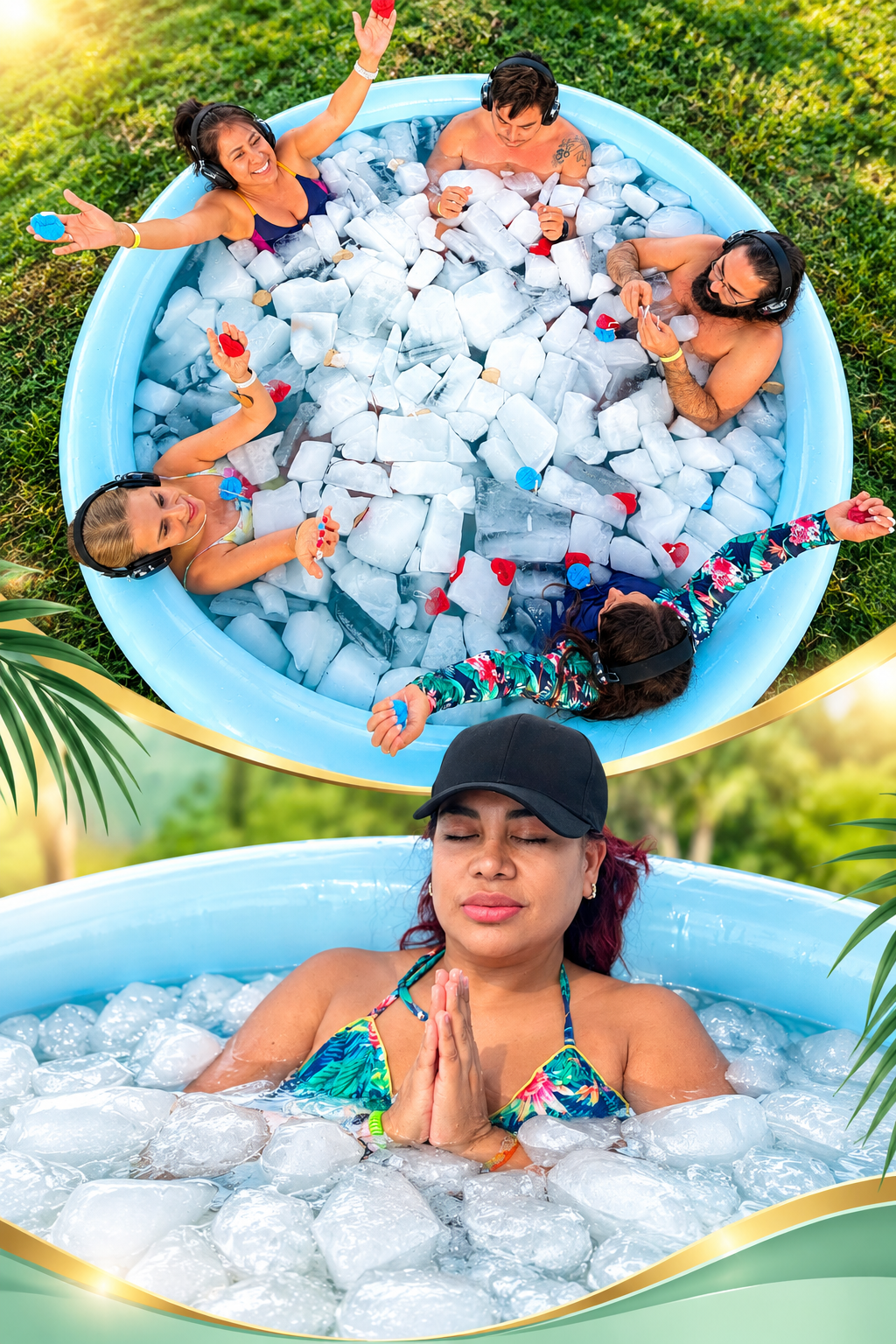
ICE INMERSION
Ice immersion has moved beyond a passing trend to become a powerful tool for holistic well-being. Inspired by the Wim Hof Method—a technique developed by the Dutch athlete of the same name, combining cold exposure, conscious breathing, and mental focus—this discipline has gained worldwide recognition for its proven benefits in reducing stress, strengthening the immune system, and increasing personal resilience.
Controlled contact with ice not only awakens the body but also activates internal processes that lead us to reconnect with our innate capacity for adaptation. Those who practice it report a sense of mental clarity, increased energy throughout the day, and renewed emotional strength in the face of daily challenges.
- Ice immersion or cold bathing involves submerging a large part of the body in water at very low temperatures (generally between 10°C and 15°C, or lower) for a few minutes.
- Main Benefits: Muscle Recovery: Helps reduce inflammation and soreness after intense workouts.
- Mental Well-being: Stimulates the release of endorphins and dopamine, which improves mood and reduces stress.
- Resilience: Strengthens the nervous system and helps control the response to stressful situations through conscious breathing.
- How it’s Done: Mental Preparation and Breathing: Deep breathing exercises (such as those inspired by the Wim Hof method) are practiced before entering the water to calm the body.
- Immersion: The time spent in the water is usually brief, from 2 to 5 minutes (sometimes up to a maximum of 7 or 10 minutes depending on experience).
- Warm-up and Exit: Upon exiting the enclosure, allow your body to gradually return to its natural temperature through movement or by wearing warm clothing.
- Contraindications and Risks This practice is not recommended without prior medical supervision in cases of:
- Cardiovascular problems or a history of cardiovascular disease, hypertension, or arrhythmias.
- Pregnancy.
- Circulatory problems, such as Raynaud’s syndrome.
- Open wounds or cold urticaria.